HEYONE Lab aims to realize carbon neutrality by developing highly efficient and robust electrochemical energy devices. We always welcome creative, passionate researchers to join us in demonstrating innovative designs from material to device level using advanced fabrication technology.



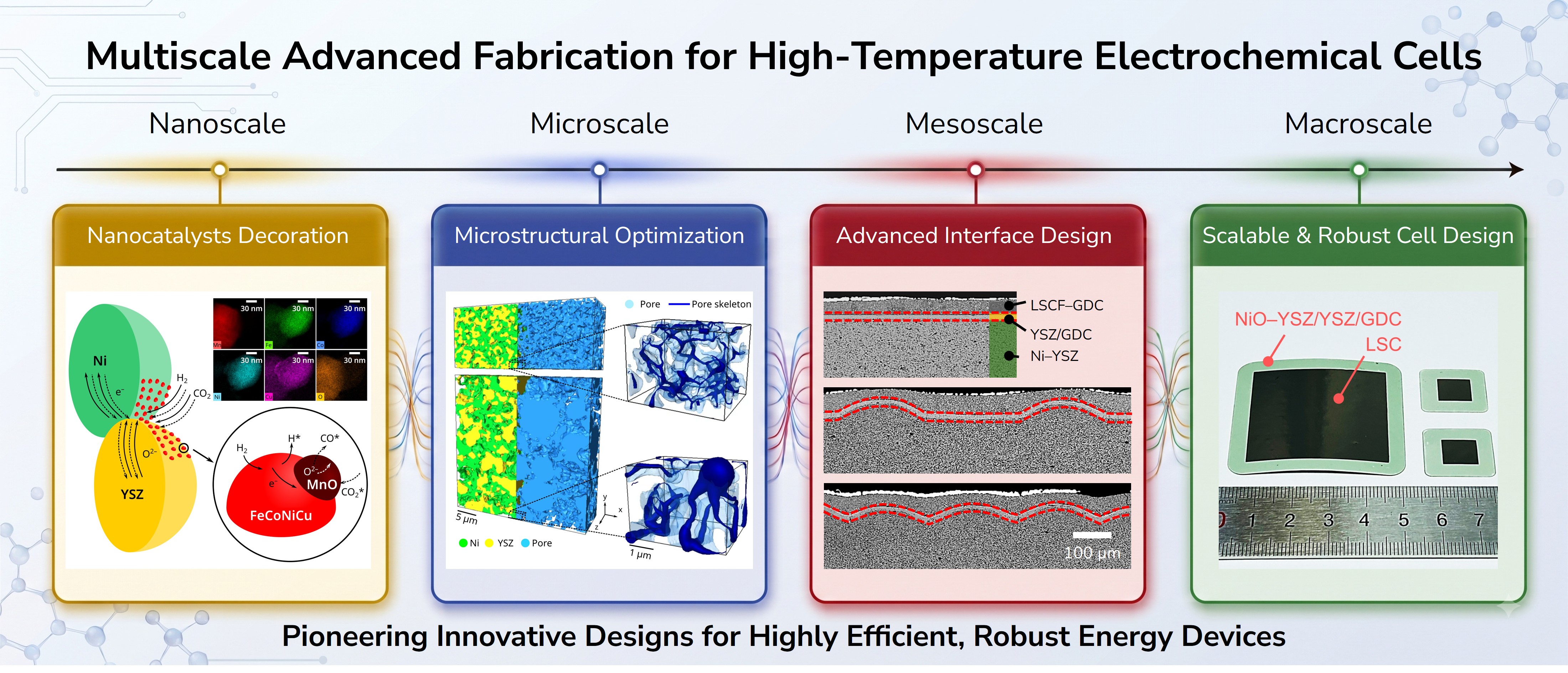
With escalating energy and environmental crises, high-temperature electrochemical devices, including reversible solid oxide cells (ReSOCs) and proton-conducting cells (RePCCs), have emerged as a cornerstone of future decarbonized energy systems. Offering high efficiency and fuel flexibility, these devices enable both clean power generation and the production of value-added chemicals (e.g., H2, CO, NH3). Leveraging advanced fabrication technology, we pursue innovative cell designs that remain robust and durable under real-world operation.
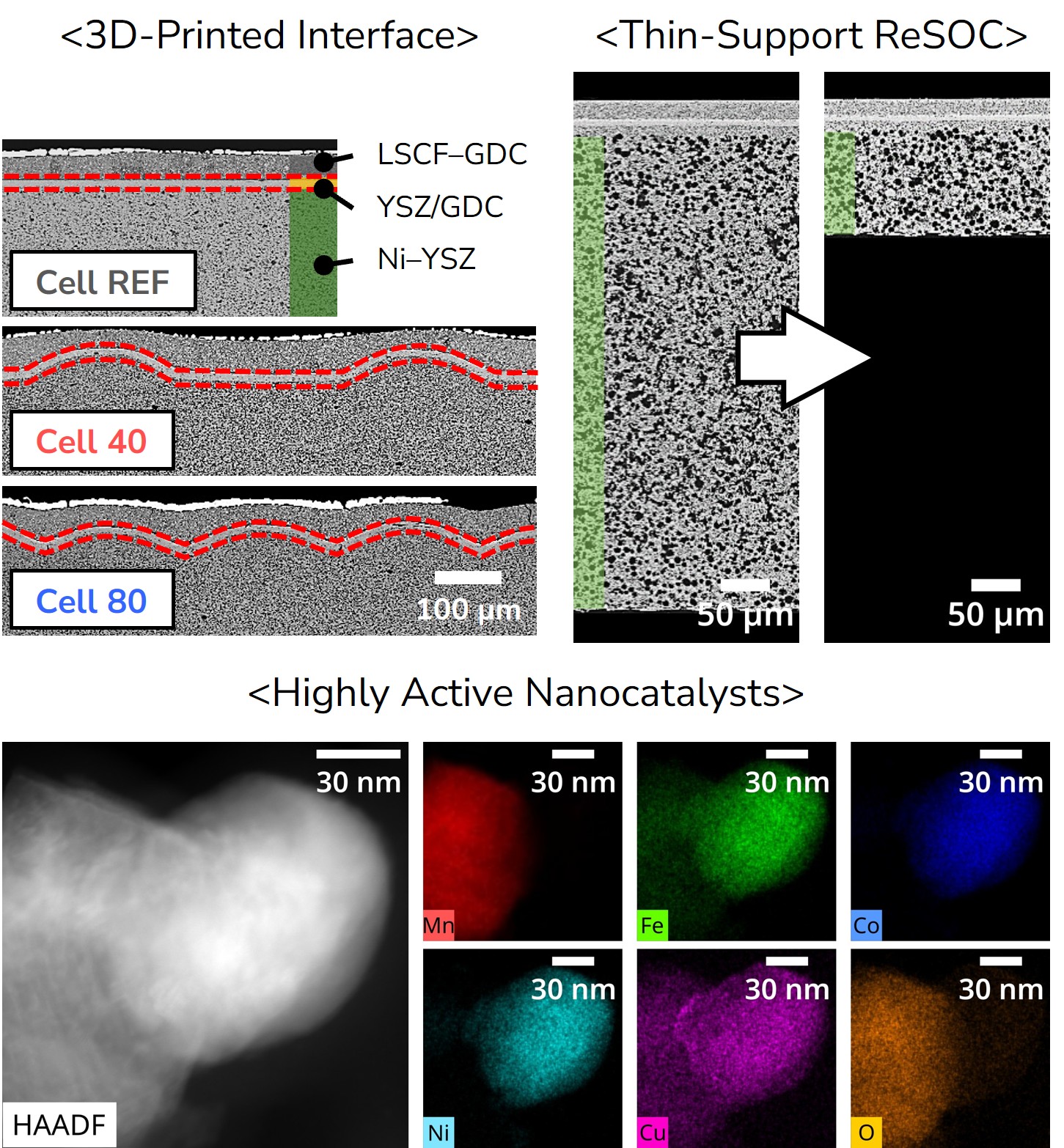
Although cell durability has improved substantially under well-controlled laboratory conditions, practical operation frequently imposes severe environments that trigger unexpected failures. We engineer tailored architectures spanning multiple length scales, from constituent materials to complete devices. Through this approach, we develop cells that deliver outstanding output while maintaining exceptional stability even under extreme thermodynamic conditions.
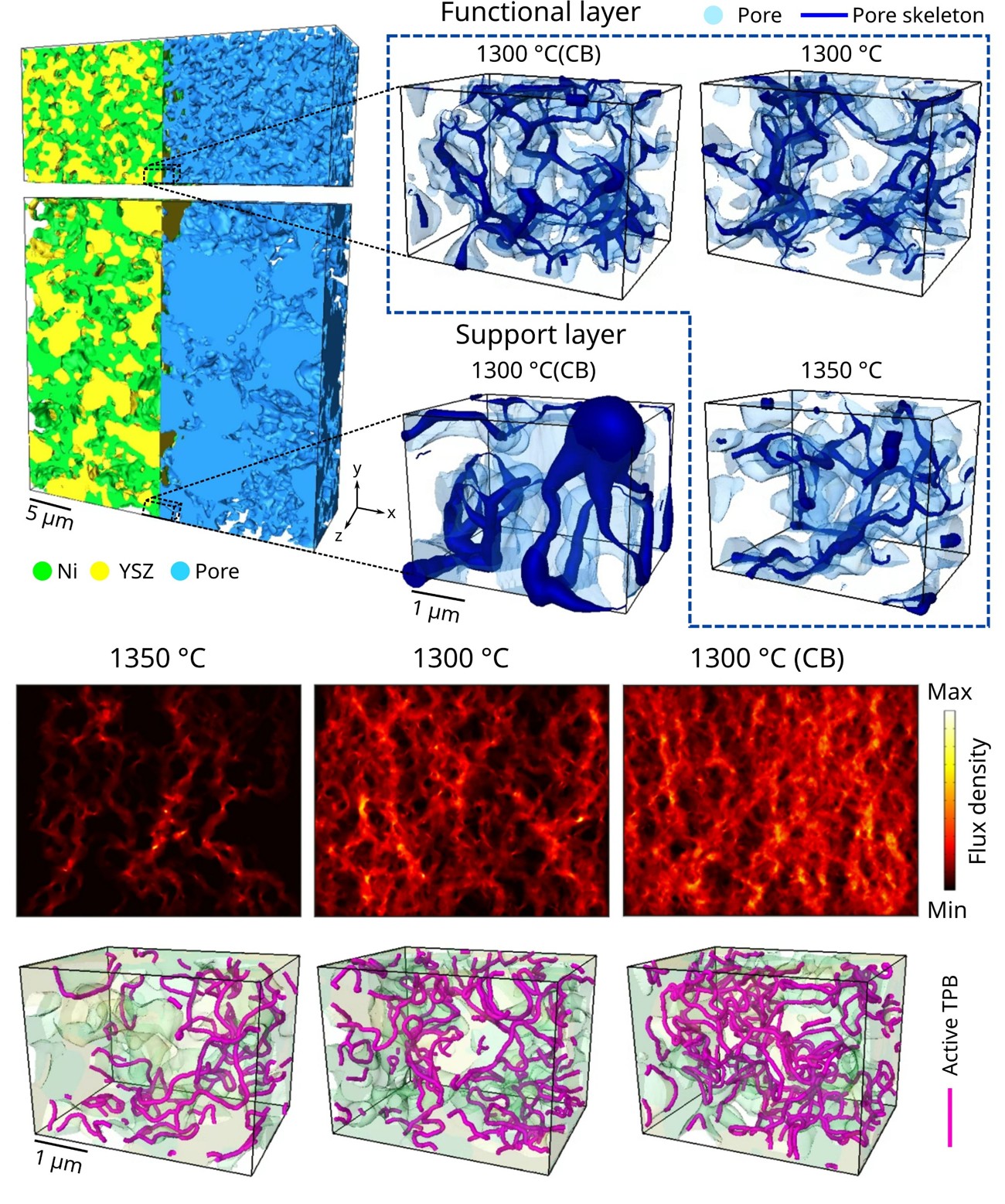
A well-balanced pore network is essential for the seamless transport of electrons, oxide ions, and gas molecules, which simultaneously governs reaction kinetics and mass transfer. However, the intricate nature of porous electrodes makes such networks difficult to characterize from two-dimensional observations alone. We therefore reconstruct these internal structures in three dimensions via nanotomography, enabling quantitative analysis and rational engineering of superior electrode morphologies.
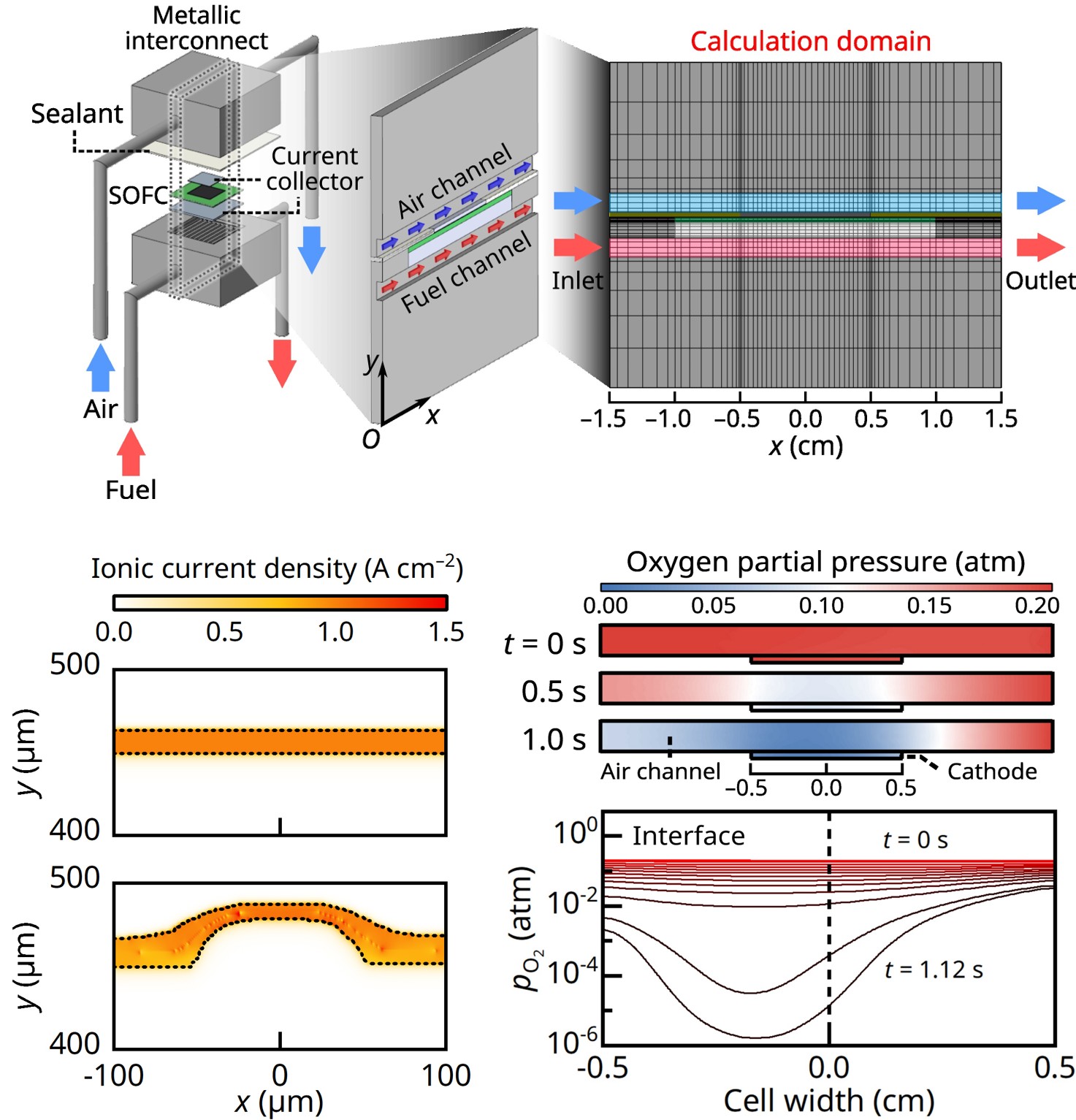
High-temperature operation renders direct observation of internal phenomena exceedingly difficult, leaving many transport and degradation processes poorly understood. We bridge this gap by coupling heat and mass transfer with electrochemical reactions, capturing the dynamic behavior of cells under realistic operating scenarios, including transient events. Ultimately, this provides concrete design guidelines for materials, electrodes, and devices.
While extensive efforts have focused on developing advanced electrode materials, the architecture of electrode–electrolyte interfaces has received relatively little attention, despite its decisive role in determining device efficiency. We develop micropatterning techniques that systematically shape these regions at the mesoscale, bridging nanoscale material design and macroscale device fabrication. By expanding reaction sites and optimizing transport pathways, we aim to overcome the fundamental limitations of conventional flat architectures, offering a practically viable route to high-performance devices.
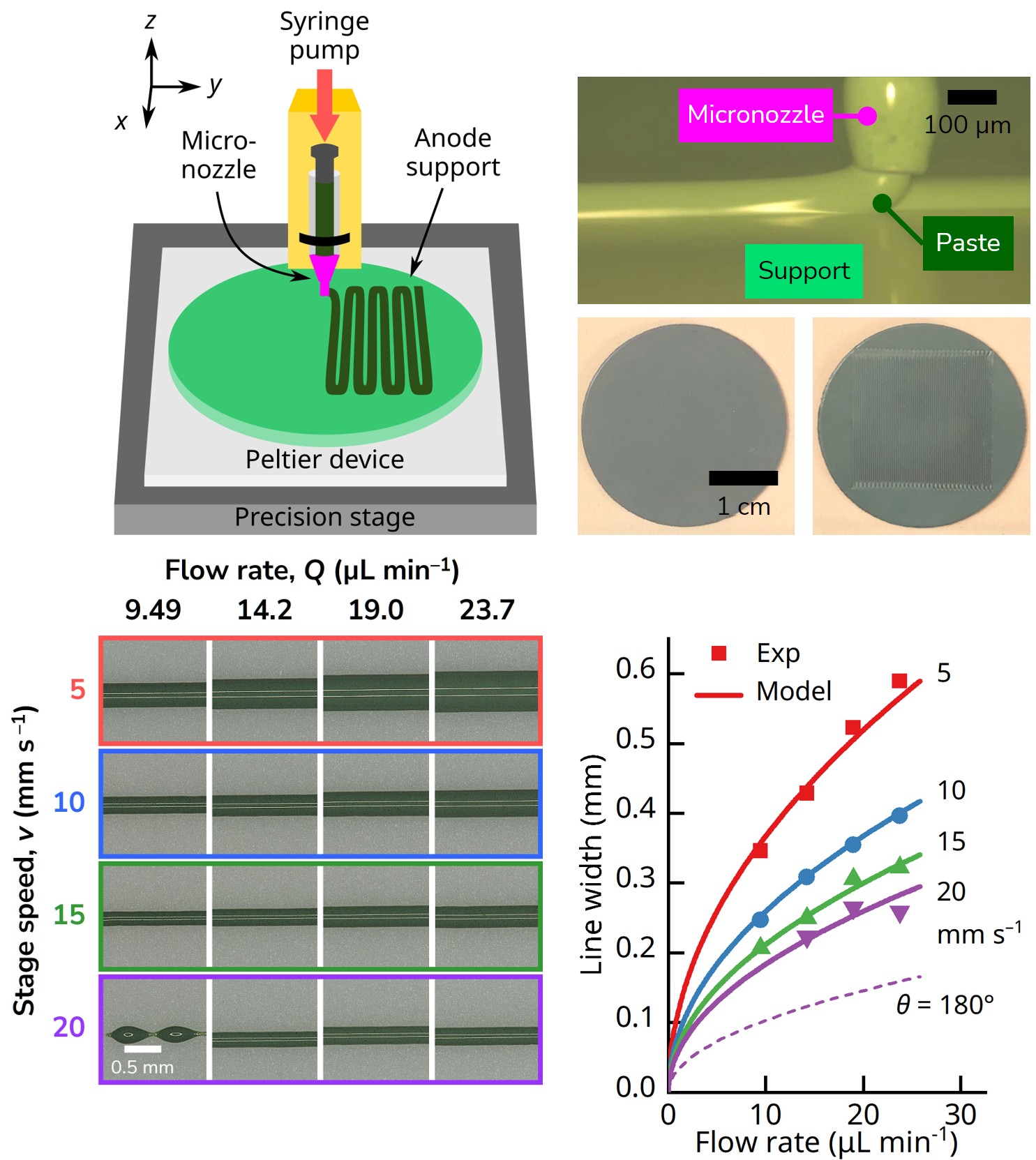
Microextrusion printing constructs three-dimensional features by dispensing highly viscoelastic pastes through a micronozzle onto a precisely positioned object, eliminating the mechanical damage inherent to subtractive processes. To achieve finer lines with higher aspect ratios, we elucidate paste rheology and optimize the corresponding printing conditions. The resulting corrugated interfaces substantially extend the electrochemically active area, delivering marked gains in power output.
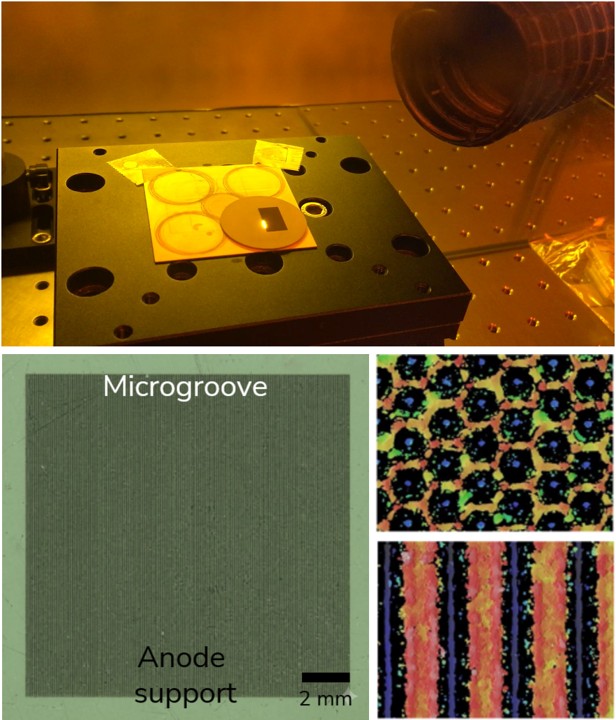
Laser beam machining sculpts material surfaces with micrometer accuracy in a rapid, contact-free, and mask-free manner. Using pulsed lasers, we engrave microtextures into electrodes and electrolytes, widening the reaction zone well beyond that of planar cells. Its high throughput and flexibility make this approach a promising pathway toward scalable interface engineering for commercial-scale cells.

Assistant Professor
Division of Climate Change
Hankuk University of Foreign Studies (HUFS)

Undergraduate
2026
Fall Semester
To be updated